
Camera Obscura

I recently posted a photo on Instagram/Facebook of a Nova Scotia camera obscura built by Dalhousie University architecture students in 2013. It’s an interesting place that is part of a hiking trail through the Cheverie salt marshes. This post led to an intriguing run of comments, including one by my friend and fellow science-poet Alice Major, asking whether the early ones were monochromatic.
Let’s start with the basic question: what is a camera obscura? Google says, "Camera obscura" literally translates from Latin to "dark chamber". It refers to a natural optical phenomenon where light traveling through a small aperture in a darkened room or box projects an inverted image of the outside world onto the opposite interior wall or surface.” The Latin phrase could also be translated as “dark room,” a phrase that became common as photography developed.
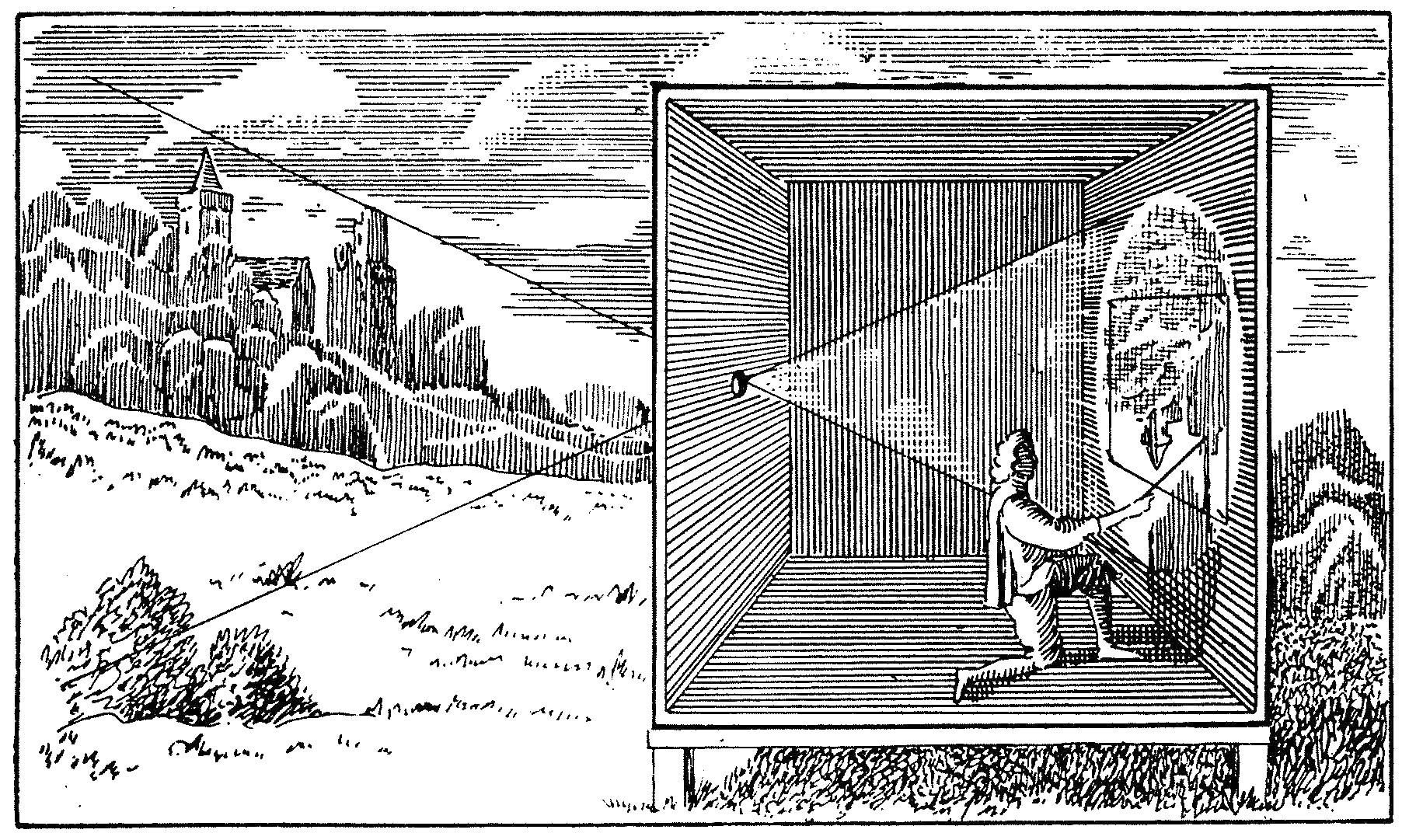
It’s also the reason why our current still-image-capturing devices are called “cameras”. The “chamber” meaning of the Latin “camera” persists in law even today: an in camera hearing involves only a few people hearing arguments or testimony, the public and media not allowed in.
The camera obscura was used by artists and astronomers as far back as Leonardo da Vinci, and maybe farther. It allowed them to trace details of a projected image, and then manipulate them into paintings, star maps, and the like.
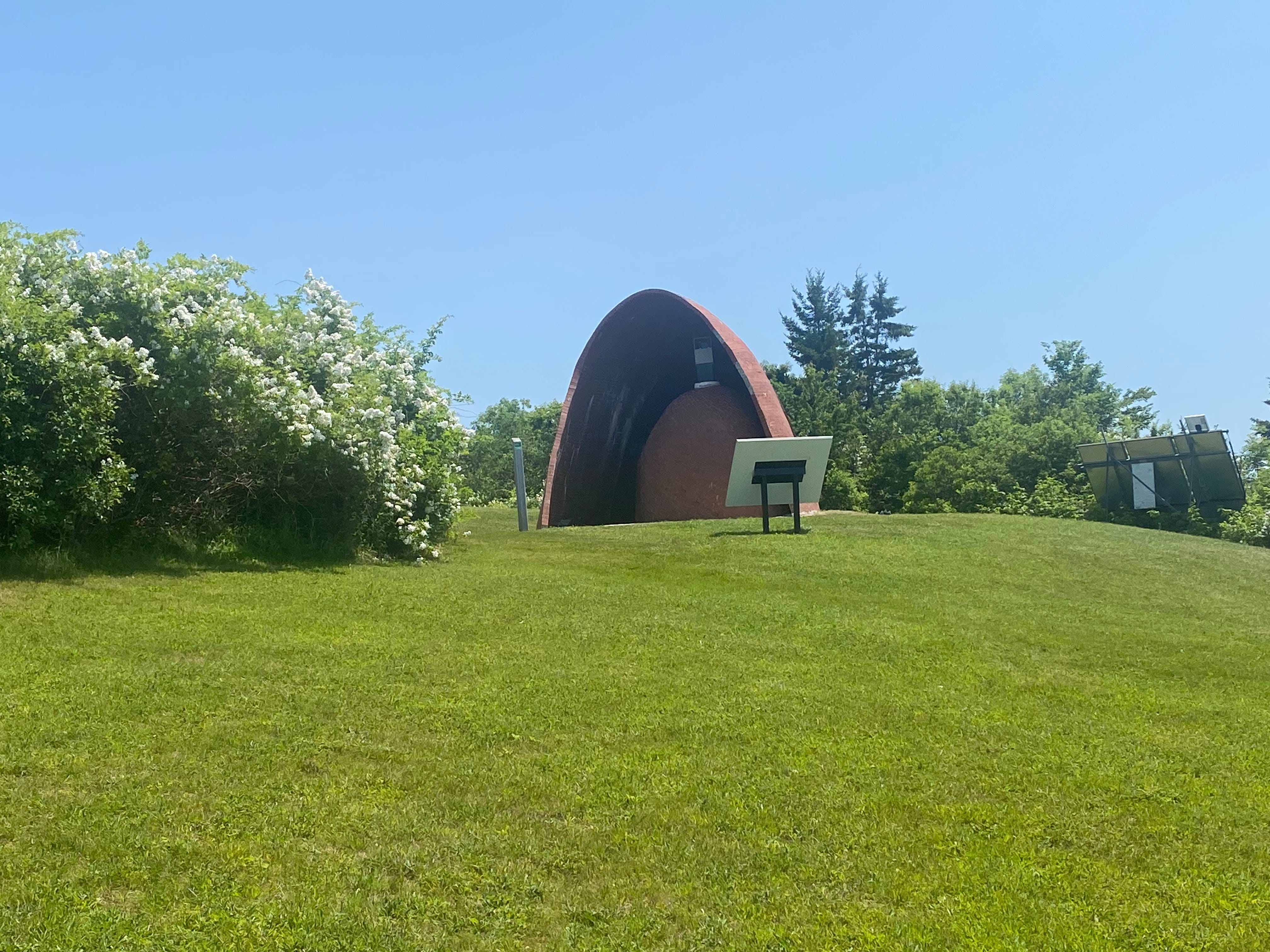
The one I visited in Cheverie, Nova Scotia, is intriguing not only for its optical effects, but also its architecture. The Atlasobscura.com website says: “The style of the structure is a construction technique called Guastavino, which is named after a Spanish architect from the late 19th century. And keeping consistent with that period, the camera uses the same “old” technology and works as it would have during that time.
The design of the exterior has three overlapping arches. Walking through the darker interior, you will see closed doors. This area is officially the large-scale pinhole camera, that you enter and close the doors behind you for the full effect. When you look up, there is a reflected and upside-down view of the cliffs across the water, and on the concrete floor below you is a real-time projection.”
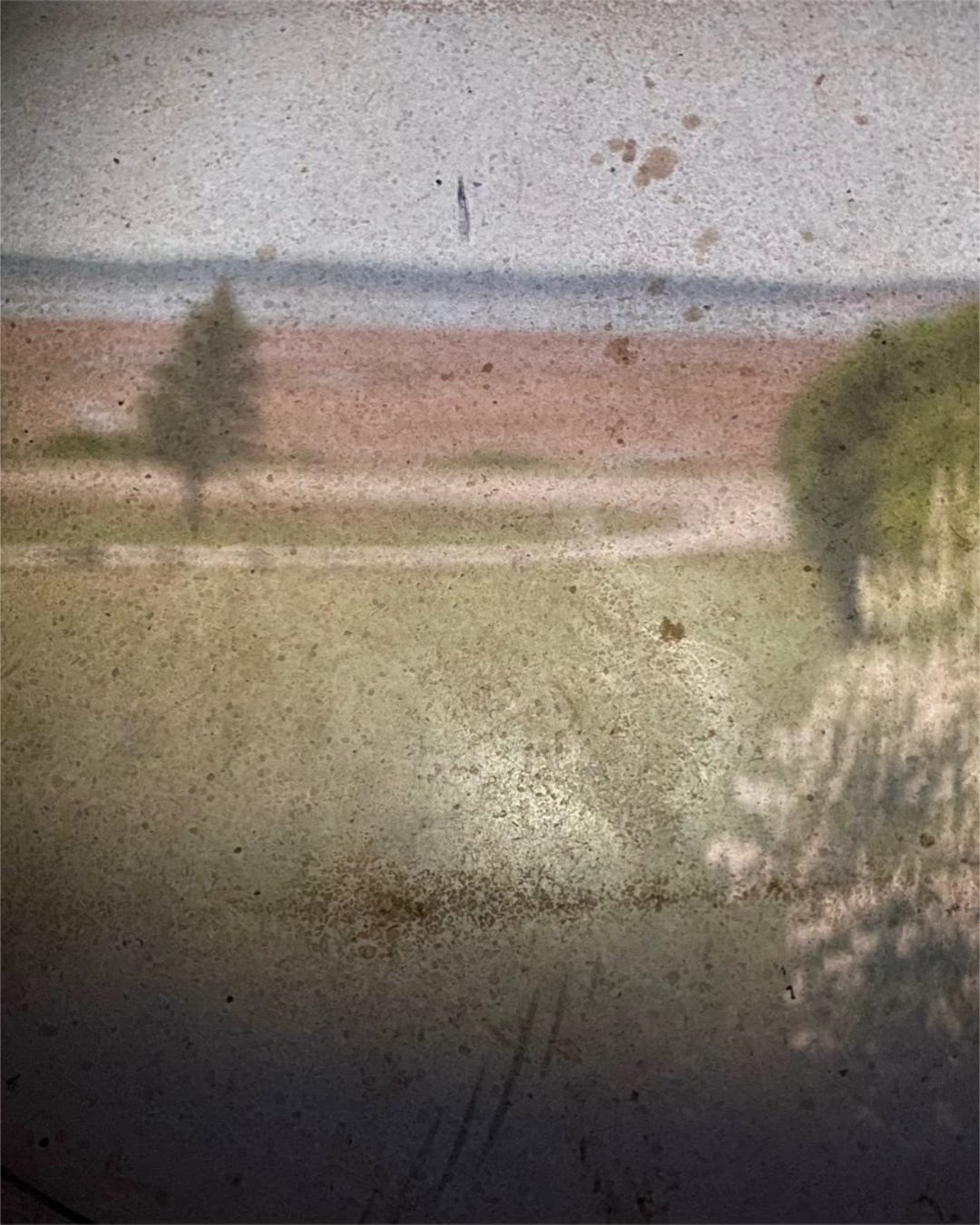
Here is an image I captured with my iPhone of the landscape as seen by the Dalhousie camera obscura. I have turned it right-side-up. This one actually employs a kind of periscope, a set of mirrors (that could use some cleaning) projecting the image of the outside onto the floor of the chamber.
Entering the chamber and closing the door is kind of magical, as the image becomes clear on the floor. Since I enjoy creating music as well as writing and photography, I tried slapping the chamber’s walls, and found the whole thing makes a great drum, reverberating any sound produced inside.
And that’s your window on the camera obscura.