
Adverbs: Dying Out Quick?

If my title sounds wrong to you, your language ear is much like mine. Adverbs are perhaps the most versatile part of speech in English. They can modify verbs (“The engine ran well”); adjectives (“I felt very sorry for her”); and even other adverbs (“Bill spoke rather quickly”).
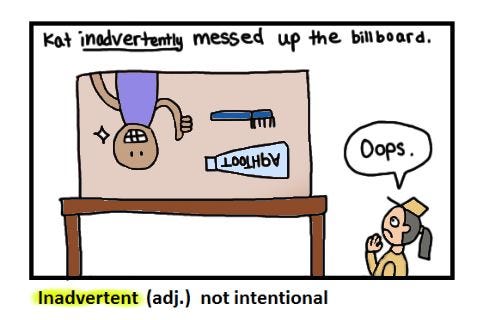
However, there’s an ongoing campaign to drop most adverbs, conducted by two armies: everyday speech, marketing and ads for one; and fiction teachers who argue student writers should minimize the use of both adverbs and adjectives, using instead strong nouns, verbs, or other ways of making the necessary point without modifiers. If you Google “use of adverbs in prose writing,” the first hits are almost uniformly negative, along the lines of “Avoid them,” or “Use them sparingly, if at all.”
Phrases like “dying out quick” or “Mary swam good” employ “flat adverbs”. In an article in The Guardian, Maddie York gives a recent example:
”This summer, EDF Energy saddened me with those colossal orange posters carrying its proud Olympic sponsorship slogan, "Helping London shine brighter." How did London shine, EDF? More brightly. That's how. But somehow the comparative adjective was selected instead of the adverb. I can see that "Helping London shine more brightly" is a slightly clunky slogan, but my view, in every case, is that if being grammatically correct damages a slogan, it's the slogan that's the problem, not the rules of grammar…”
I’ve seen similar tone-deaf usages like “Eat healthy” in ads and product marketing.

However, I would never exclude adverbs from my writer’s toolkit, Sure, I use strong, specific nouns and verbs whenever I can, but I don’t ignore the nuances and rhythmic variations that good adverbs bring. Consider, for example, the famous final sentence of Joyce’s story “The Dead”: “His soul swooned slowly as he heard the snow falling faintly through the universe and faintly falling, like the descent of their last end, upon all the living and the dead.” Don’t those twin phrases “falling faintly” and “faintly falling” add not only alliteration but also a poetic quality?
Or consider another classic sentence, in this case from “Gertrude the Governess: or, Simple Seventeen” by Canadian humorist Stephen Leacock: “Lord Ronald said nothing; he flung himself from the room, flung himself upon his horse and rode madly off in all directions.” The sentence is already amusing without “madly,” but that addition makes it hilarious.
Personally, I miss once-popular adverbs like “hither,” “thither,” and “yon.” I hope still-current and evocative ones like “faintly” and “disdainfully” don’t join them on the junk heap of linguistic history, as written English increasingly (see what I did there?) begins to sound like texting. U know?
Lucky for me my mother used adverbs a lot in her daily speech so I had an early role model. I'm all for sustaining them! I am not enamoured of the plain language police, although I can acknowledge the need for plain language in bridging the gap between the academic and the popular, and in the interests of public education. Plain language also comes in handy for fundraising. I worked for a research institute and we joked about the work being so advanced that even we didn't understand it, the point being that if we could not explain our work in lay terms, it would be difficult to attract funding. But I digress. Bottom line: language is far more than just a tool, and the use of the adverb is key to that thesis.